Diamondexch99 Login on a New Device: Important Security Checks

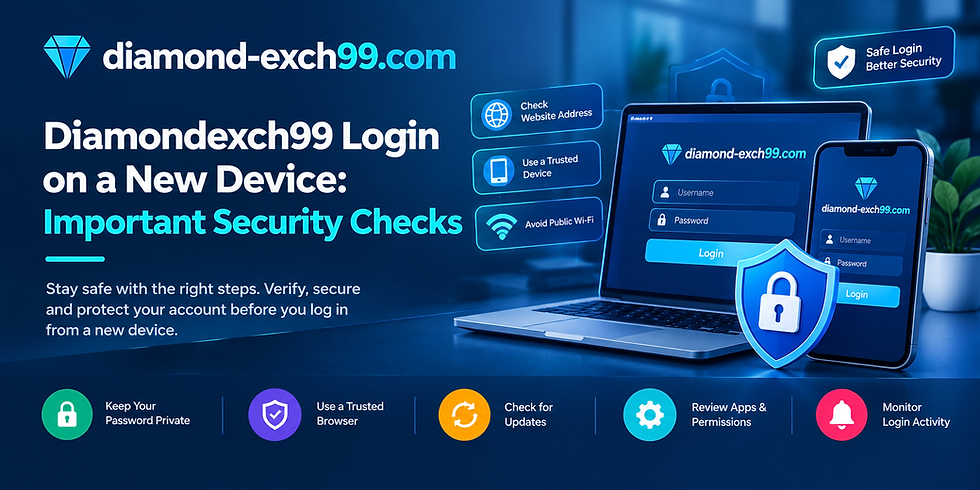
Logging into your Diamondexch99 account from a new phone, tablet, or computer requires a few additional security checks. Before entering your login details, verify that you are using the correct website, choose a trusted device, and make sure your browser and operating system are up to date.
For account access, always verify the website address carefully and avoid login links received from unknown sources. Never share your password, OTP, or verification code with another person, even if they claim to be providing technical or account-support assistance.
Why New Device Login Needs Extra Care
Logging in from a new device does not automatically indicate a security problem.
However, a new device may involve a different browser, network connection, operating system, or security environment. Taking a few minutes to check these elements before signing in can help prevent avoidable security issues.
Whether you are accessing Diamondexch99 from a new smartphone or computer, basic security checks should always come first.
Start With the Website Address
Before entering your username or password, carefully check the website address.
For Diamondexch99 users, make sure you are accessing the intended website and not a similar-looking domain or an unfamiliar page.
Look for:
Correct spelling
Expected domain
HTTPS connection
No browser security warning
No unusual redirects
For example, if you normally use diamond-exch99.com, type the address yourself or access it through a trusted bookmark rather than relying on an unexpected login link.
Use a Trusted Device
Whenever possible, use your own phone, tablet, or computer to access your account.
Avoid logging into personal accounts from:
Public computers
Shared office systems
Internet café computers
Someone else's personal device
Unfamiliar machines
You cannot always know what applications, browser extensions, or security settings are installed on another person's device.
Update the New Device
Before using a new device for important online accounts, check for available operating system updates.
You should also update your browser and security software where applicable. Only download updates through the device's normal settings or from trusted sources.
Do not install an unknown application simply because someone claims that it is required to access your account.
Check the Browser
Use a current version of a reputable web browser.
Avoid modified browsers, unknown applications, or browser extensions that claim to make login faster or bypass normal security checks.
If your browser displays an unexpected security warning, stop before entering your credentials and investigate the issue.
Avoid Suspicious Login Links
You may receive login links through WhatsApp, SMS, email, or social media. Do not open an unexpected link automatically.
Instead, open your browser yourself and enter the website address that you have independently verified.
This can reduce the risk of being redirected to a fake login page designed to collect usernames and passwords.
Be Careful With Public Wi-Fi
Public Wi-Fi networks can introduce additional privacy and security risks.
When accessing important accounts, use a trusted private network or your mobile data connection whenever possible.
If your browser displays a security warning while you are connected to public Wi-Fi, do not ignore it simply because you are using a familiar location.
Do Not Save Your Password on Shared Devices
On your own device, a reputable password manager can help you create and manage unique passwords.
However, avoid saving your credentials on public or shared computers.
If a browser asks whether you want to save your password, make sure the device belongs to you before accepting. Always sign out after using an unfamiliar computer.
Check the Device for Unknown Software
Before signing in from a new device, review recently installed applications and software.
Be cautious if you notice:
Unknown applications
Unfamiliar browser extensions
Remote-access software
Modified APK files
Programs you do not remember installing
Unknown software can create unnecessary security risks and may potentially expose information entered on the device.
Review App Permissions
If you are using a smartphone or tablet, review the permissions granted to applications.
Be particularly careful with apps requesting access to:
Contacts
Messages
Files
Camera
Microphone
Location
Only grant permissions that are necessary for an application's legitimate functions.
Do not approve permissions simply because an application requests them.
Keep Your Password Private
Using a new device does not change one of the most important account-security rules: your password should remain private.
Do not send your password to someone who claims they are helping you set up your new device.
If you require technical assistance, explain the problem without revealing your login credentials.
Your password should never be shared through WhatsApp, SMS, email, social media, or chat.
Handle Verification Codes Carefully
A verification code may be required when accessing an account from a new device.
Treat this code as confidential information.
Never forward a verification code to another person, even if they claim to be a support representative. If someone unexpectedly asks you to provide or forward the code, stop and independently verify the request.
Check Login Notifications
After successfully accessing your account, review any available security notifications.
Depending on the account features, you may be able to see information about recent logins, recognised devices, or account activity.
If you notice a device, location, or login time that you do not recognise, investigate it instead of ignoring it.
Remove Old Devices
If you have permanently stopped using an old phone or computer, check whether your account still has an active session on that device.
If device or session management is available, remove devices that you no longer use.
This is especially important if your old phone or computer was:
Sold
Lost
Stolen
Repaired
Given to another person
Removing old sessions can help prevent unnecessary access from devices that are no longer under your control.
What If the New Device Cannot Log In?
If you cannot access your account from a new device, start with basic troubleshooting.
Try these steps:
Confirm the website address.
Check your internet connection.
Refresh the page.
Update your browser.
Clear the browser cache.
Try private browsing.
Restart the device.
Test another trusted browser.
If the problem continues, use the recognised account-recovery or support process rather than relying on an unknown person offering to fix the login.
What If You See an Unexpected Verification Request?
Do not approve a login or verification request that you did not initiate.
Someone else could potentially be attempting to access the account.
If this happens, review your account activity and security settings. Change your password if you believe it may have been exposed.
If unexpected requests continue, contact support through a verified channel.
What If You Lose Your Old Phone?
If your old phone is lost or stolen, secure your important online accounts as soon as possible.
Change passwords where appropriate and remove the old device from active sessions if the account provides that option.
You should also contact your mobile provider if you need to secure your phone number or SIM.
Do Not Install "Login Fix" Software
Be cautious if someone tells you that you need a special application, browser extension, APK, or other software to access your account from a new device.
Do not install unknown software simply to solve a login problem.
Use the normal website, browser, and recognised account-recovery options instead.
New Device Security Checklist
Before logging into your Diamondexch99 account from a new device, confirm:
Website: Is the domain correct?
Device: Is it your own trusted device?
Updates: Are the operating system and browser current?
Software: Have you checked for unknown applications?
Network: Are you using a trusted connection?
Password: Is your password unique and private?
Verification: Are you keeping security codes confidential?
Sessions: Have you reviewed old and current devices?
Links: Did you access the website through a trusted route?
If any of these checks raise a concern, stop before entering your account credentials.
After Your First Login
Once you successfully access your account from the new device, take a moment to review your security settings.
Check available:
Recovery options
Active sessions
Login notifications
Recognised devices
Additional authentication features
If you notice anything unfamiliar, investigate it before continuing to use the account.
It is also a good opportunity to remove old devices and update security settings that may no longer be appropriate.
Conclusion
Logging into an account from a new device is generally straightforward when basic security practices are followed.
Before accessing Diamondexch99, verify the website address, use a trusted and updated device, avoid suspicious login links, and keep your password and verification codes private.
After logging in, review active sessions and available security settings. Removing old or unfamiliar devices can help maintain better control over your account.
Most importantly, never give your password, OTP, or other confidential credentials to someone simply because they claim to be helping with a login problem.


Comments